
Room 710B, Building E2,Hongqiao World Center, Shanghai

As the year draws to a close and companies enter a critical period of review and planning, many managers often overlook a core task that directly impacts operational stability and costs—the Annual Inspection of the Automated Storage and Retrieval System (AS/RS).
You might think: “The system is running fine, so why invest time and effort in an annual inspection?” This common misconception often hides operational risks and efficiency losses. This article, written from the client’s perspective, reveals the underlying value, frequent misunderstandings, and actionable steps for conducting an AS/RS annual inspection, helping you transition from “reactive maintenance” to “proactive optimization” in system management.
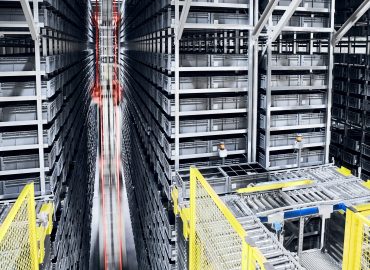
An AS/RS is a complex integrated system where many “sub-health” conditions can remain hidden:
The positioning accuracy of stacker cranes may gradually drift, quietly accumulating collision risks;
Storage racks may have minor deformations, reducing their load-bearing capacity;
Occasional system communication delays might not affect daily operations but could lead to sudden congestion during peak periods.
The primary value of an annual inspection is to uncover these “not-yet-failed but deteriorating” potential issues through professional assessment, enabling predictive maintenance and avoiding significant losses from unplanned downtime.
In reality, a professional annual inspection is a process of system optimization and planning, which should include:
Performance Restoration: Ensuring all equipment parameters meet design standards;
Data Optimization: Analyzing Warehouse Management System (WMS) historical data to assess storage location utilization and whether storage strategies align with business changes;
Forward Planning: Identifying system bottlenecks and planning upgrade paths in advance based on projected business growth.
Compile annual failure records, alarm logs, and operational feedback. Clearly define business pain points and future needs, and approach the inspection with specific questions.
Focus on supervising:
Hardware Level: Laser measurement of rack verticality, functional testing of all safety devices, inspection of hidden areas (e.g., wire ropes, electrical cabinet terminals);
Software and Data: Inventory accuracy audit, in-depth analysis of system logs, and review of storage and picking strategies.
A comprehensive annual inspection report should include:
Health assessment and risk classification
Root cause analysis of identified issues
Specific improvement recommendations with projected benefits
Based on this, you can prioritize repairs, budget for the coming year, and make informed decisions about potential system upgrades.
A thorough annual inspection provides you with:
A Risk Map, clearly outlining system vulnerabilities;
A Basis for Cost Forecasting, supporting the scientific planning of maintenance budgets;
A Foundation for Refurbishment Decisions, informing future expansion and optimization plans.
An AS/RS is a core infrastructure of the supply chain. Its annual inspection should not be a mere formality but a strategic component of proactive management. As the Spring Festival approaches, schedule a comprehensive “check-up” for your AS/RS to understand your risks and maintain control.
Lorem ipsum dolor sit amet, consetetur sadipscing elitr, sed diam nonumy eirmod tempor invidunt